Femicide — A Persistent Crisis Marked by Regional Disparities and Gendered Violence
Background
The term “femicide” is used to refer to all types of gender-related killings of women and girls. Femicide represents the most extreme manifestation of gender-based violence against women and girls. Very often such killings are not isolated incidents but rather the culmination of pre-existing forms of gender-based violence that affect all regions and countries worldwide.
The United Nations established Nov. 25 as the International Day for the Elimination of Violence against Women, which continues with an annual 16 Days of Activism campaign, running from Nov. 25 to Dec. 10. This day commemorates the brutal assassination of the Mirabal sisters in the Dominican Republic on Nov. 25, 1960.
More than two decades later, and despite the efforts of women’s rights movements to demand justice and accountability, as well as some notable progress in preventing and responding to violence against women and girls, significant challenges persist in fully addressing the issue.
A sobering report released by UN Women and the UN Office on Drugs and Crime (UNODC) recently reveals that in 2023, 140 women and girls died every day at the hands of their partner or a close relative, which means one woman is killed every 10 minutes. Another report also indicates a trend that attention to the problem of femicide may have waned in the wake of the COVID-19 pandemic.
While femicide is a universal issue, transcending borders, socioeconomic statuses, and cultures, its severity varies regionally. Therefore, this story will focus on the temporal and spatial variations and comparisons of global femicides, as well as the gender differences in cases involving killings by intimate partners or family members.
Key Questions
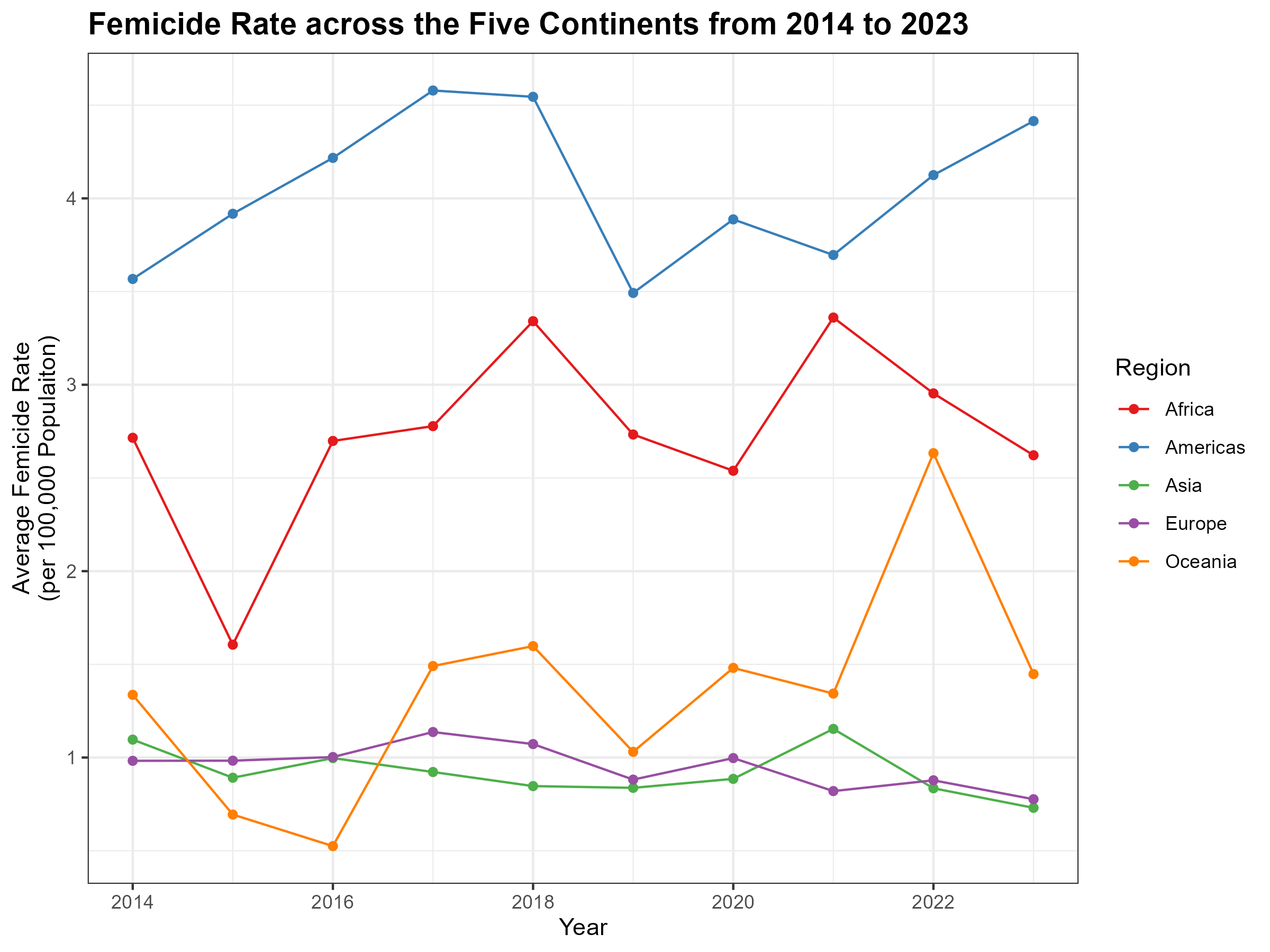
Q1: How did the rate of femicide change across the five continents (regions) from 2014 to 2023?
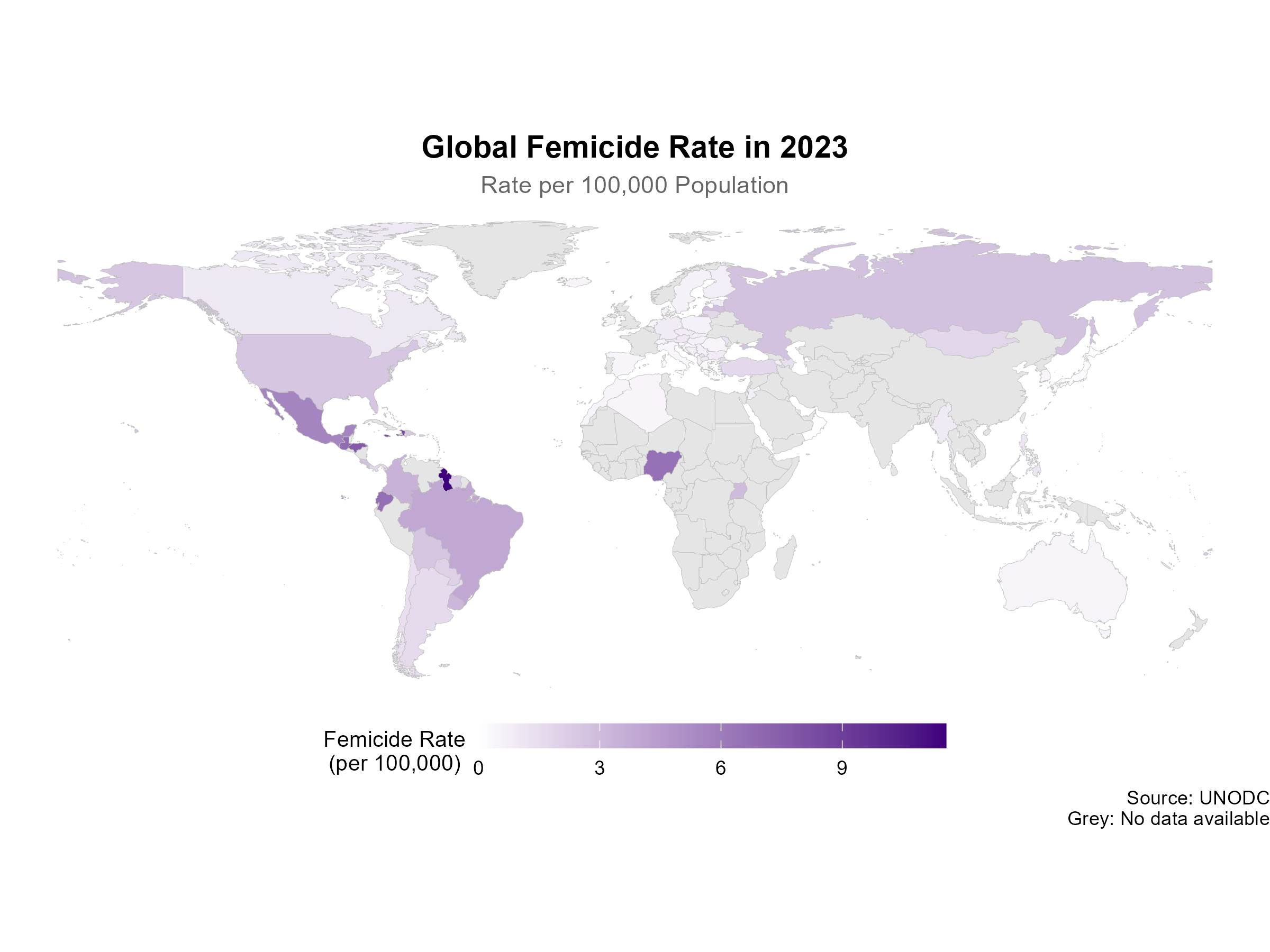
Q2-1: What are the rates of femicide in various countries in 2023?
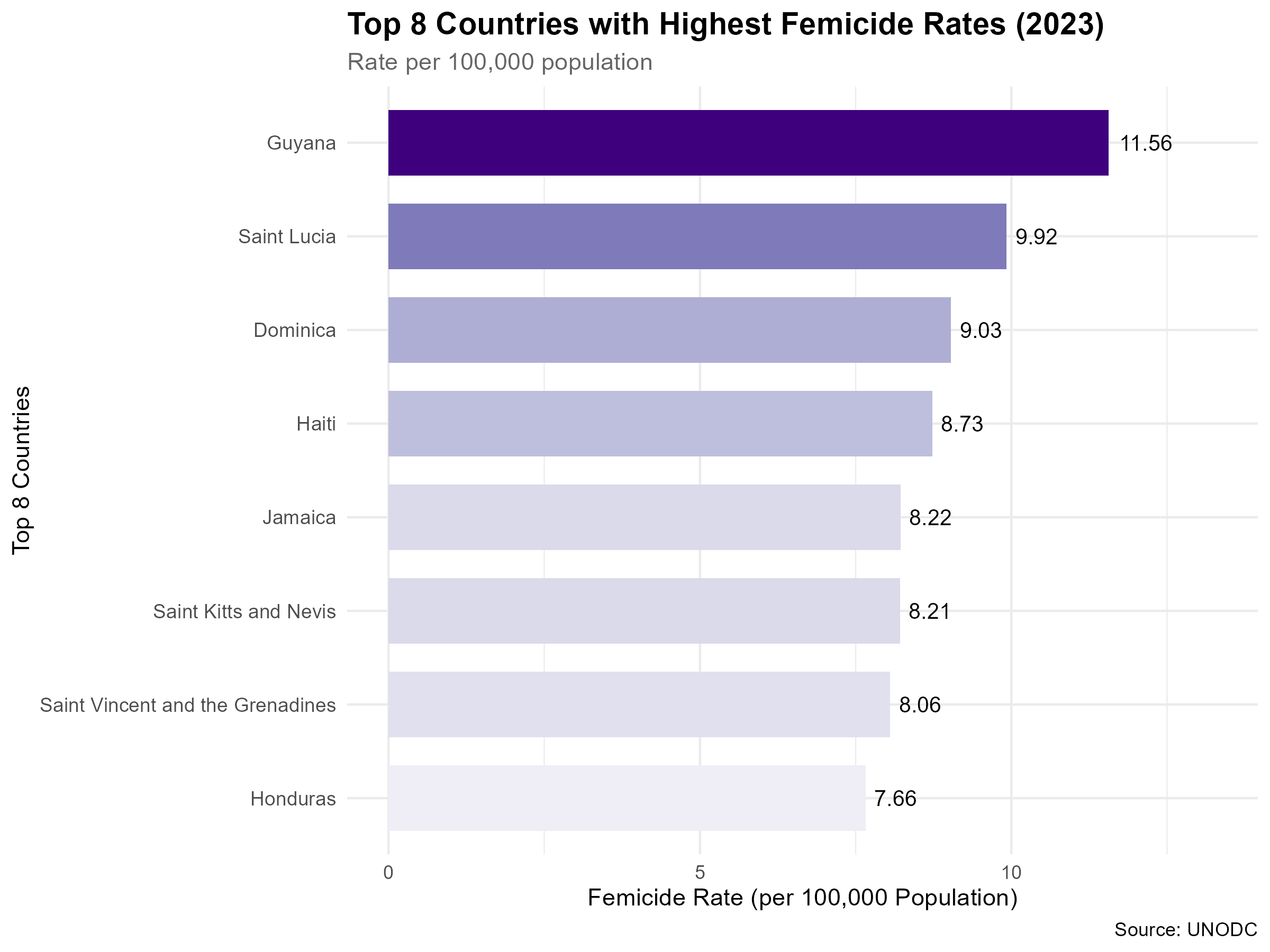
Q2-2: Which 8 countries had the highest femicide rates in 2023?
Q3: What was the distribution of perpetrator-victim relationships in femicide cases across five continents (regions) in 2023?
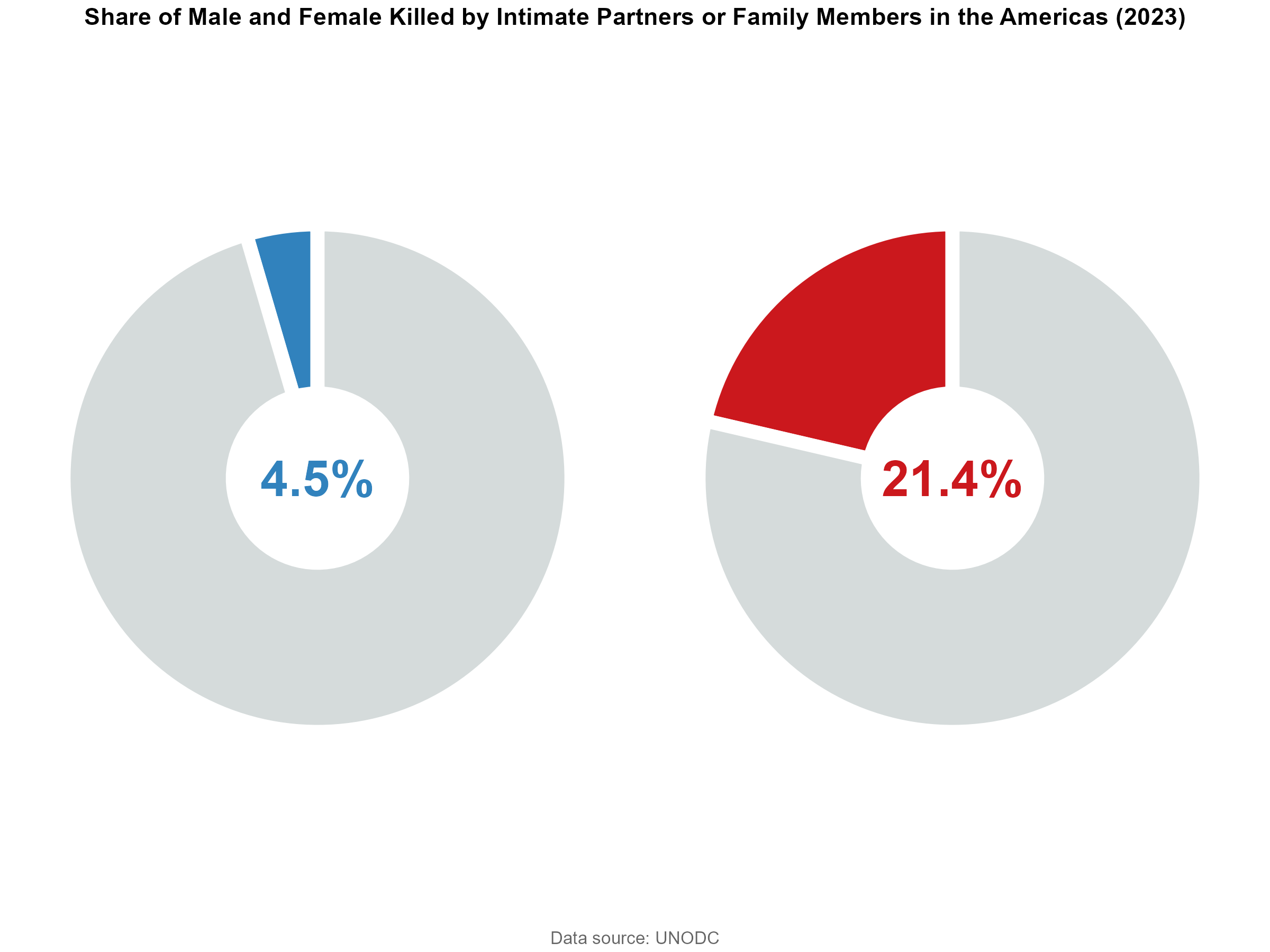
Q4: What is the share of male and female homicide victims killed by an intimate partner or family member across five continents (regions)?
Data Source
This dataset is obtained from the United Nations Office on Drugs and Crime (UNODC).
The dataset records the annual number/rate per 100,000 population of intentional homicide victims in countries worldwide from 1990 to 2024, including the victim’s gender, age, victim-perpetrator relationship, and the situational context of the homicide, and also includes data on individuals convicted and arrested/suspected.
Key Findings
1. The Americas persistently show the highest femicide rate, followed by Africa. Americas and Oceania have seen a recent rise in their rates, while Asia and Europe maintain relatively lower and stable rates.
Significant Regional Disparities: The gap between Africa, the Americas, and other continents is stark and persistent, underscoring deep-seated regional differences in social, legal, and economic factors influencing violence against women.
No Significant Downward Trend in High-Rate Regions: Despite global awareness and policy efforts, regions with the highest femicide rates, particularly Africa and the Americas, don’t show clear declines over the decade, suggesting that preventive measures may be insufficient or face implementation challenges.
Data Gaps: It should be noted that while Africa’s rate is lower than that of the Americas in the chart, this may reflect significant data gaps, as many African countries do not report relevant statistics to UNODC. According to UNODC estimates, Africa’s actual femicide rate is likely higher than that of the Americas.
2. Severe data gaps in Asia and Africa in 2023. High femicide rates persist in Latin America, Southern Africa, and Eastern Europe, contrasting with lower rates in Western Europe and Oceania.
High-Rate Clusters: Elevated rates are not evenly distributed but appear in regional clusters, suggesting shared underlying risk factors such as socioeconomic conditions, legal frameworks, or cultural norms regarding gender-based violence within these areas.
Global Hotspots: The highest rates per 100,000 population are concentrated in Latin America and the Caribbean (e.g., El Salvador, Honduras, Jamaica) and selected African nations (e.g., South Africa, Lesotho), aligning with existing research on femicide intensity in these regions.
Data Gaps: Some areas, particularly in Africa, parts of Asia, and conflict zones, may appear with missing data, underscoring challenges in consistent reporting and the likelihood that true rates in these regions may be high. Since 2020, the number of countries reporting or publishing data on the killing of women by intimate partners or other family members has decreased by 50 percent.
3. All eight highest-rate countries are located in the Caribbean and Central America.
Guyana has the highest recorded rate (11.56), making it the country with the most severe femicide incidence among those with available data.
Extraordinarily High Rates: Rates range from 7.66 to 11.56 per 100,000 population, far exceeding the global average, which indicates severe levels of gender-based lethal violence.
Closely Grouped High Rates Concentrated in One Region: The tightly clustered rates across these eight countries, six of which are small Caribbean islands (Guyana, Saint Lucia, Dominica, Jamaica, Saint Kitts and Nevis, Saint Vincent and the Grenadines), indicate a region-wide crisis with shared structural risk factors.
4. Killed by family members and intimate partners is the most common manifestation of femicide.
“Intimate/Family” is the Dominant Perpetrator-Victim Relationship: Across all regions, intimate partners or family members represent the highest proportion of perpetrators in femicide cases, confirming that the greatest danger to women often comes from within their own homes and close relationships. In fact, the largest share of intimate partner/family member killings in Europe and in Asia is committed by intimate partners, with 64% being murdered by their intimate partners in Europe and 75% in Asia.
UNODC Estimated Statistics: Approximately 51,100 women and girls were killed at home by people closely related to them in 2023, accounting for 60 percent of all female homicides. Globally, around 1.3 women per 100,000 female population are estimated to have been killed by an intimate partner or another family member in 2023. In terms of regional differences, it is estimated that the highest rate of intimate-partner/family member femicide was in Africa (2.9 per 100,000 female population), followed by the Americas (1.6), Oceania (1.5), Asia (0.8), and Europe (0.6).
Note: The proportion of femicides committed by intimate partners or family members in Oceania is notably high because statistics in the region only include cases involving intimate partners or family members and those with unknown perpetrator-victim relationships.
5. Homicide within the family takes a much higher toll on women than men.
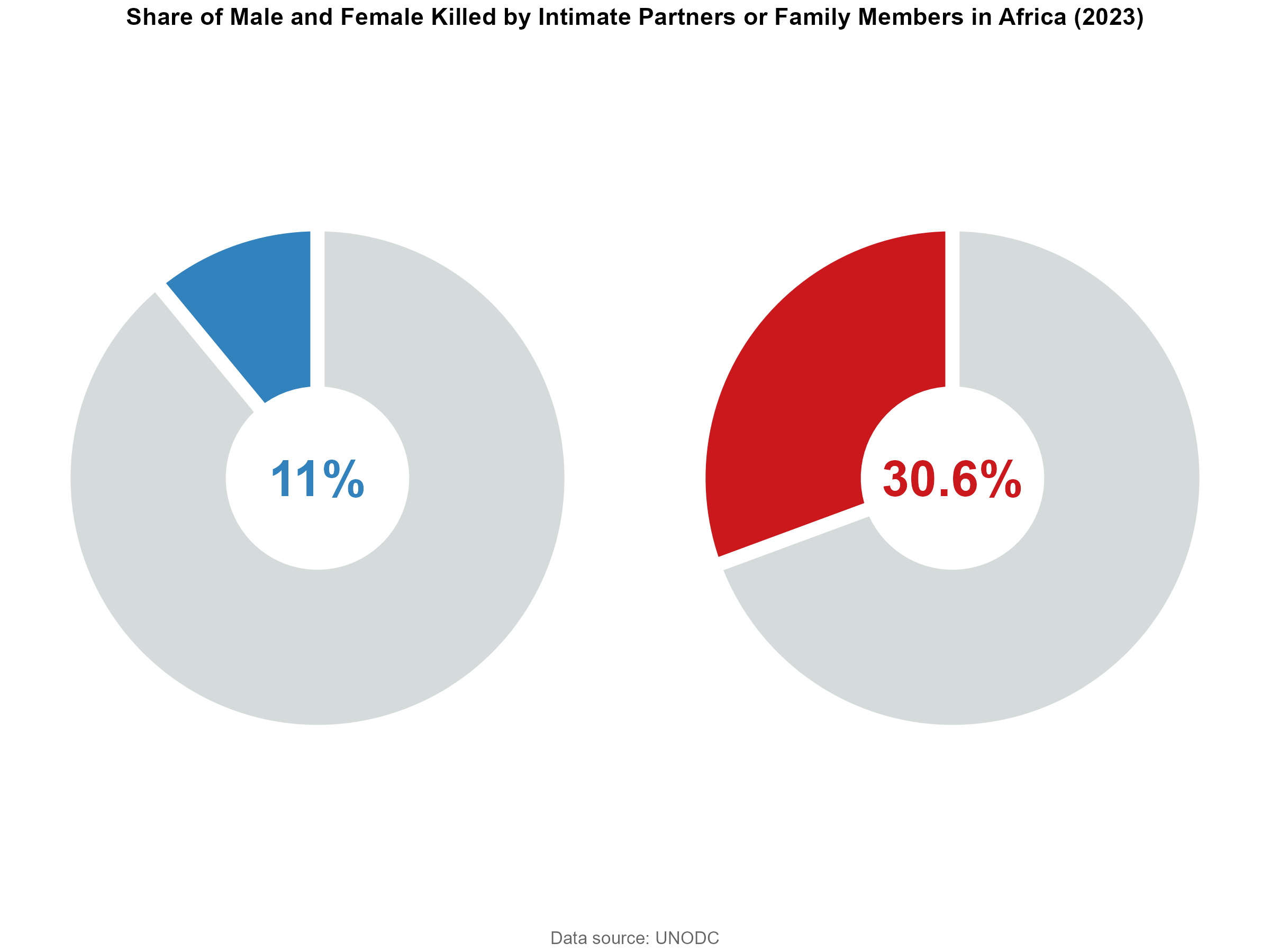
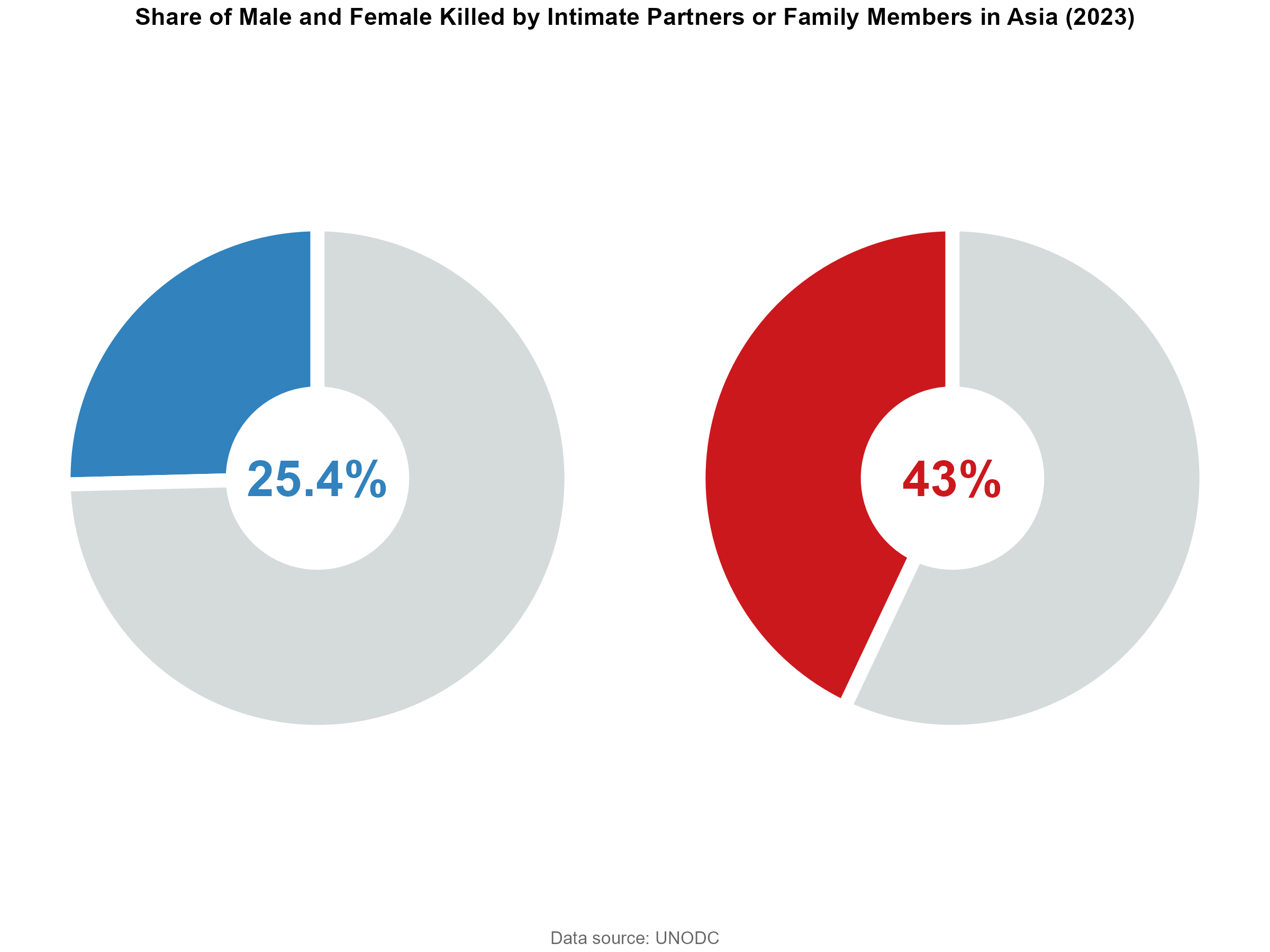
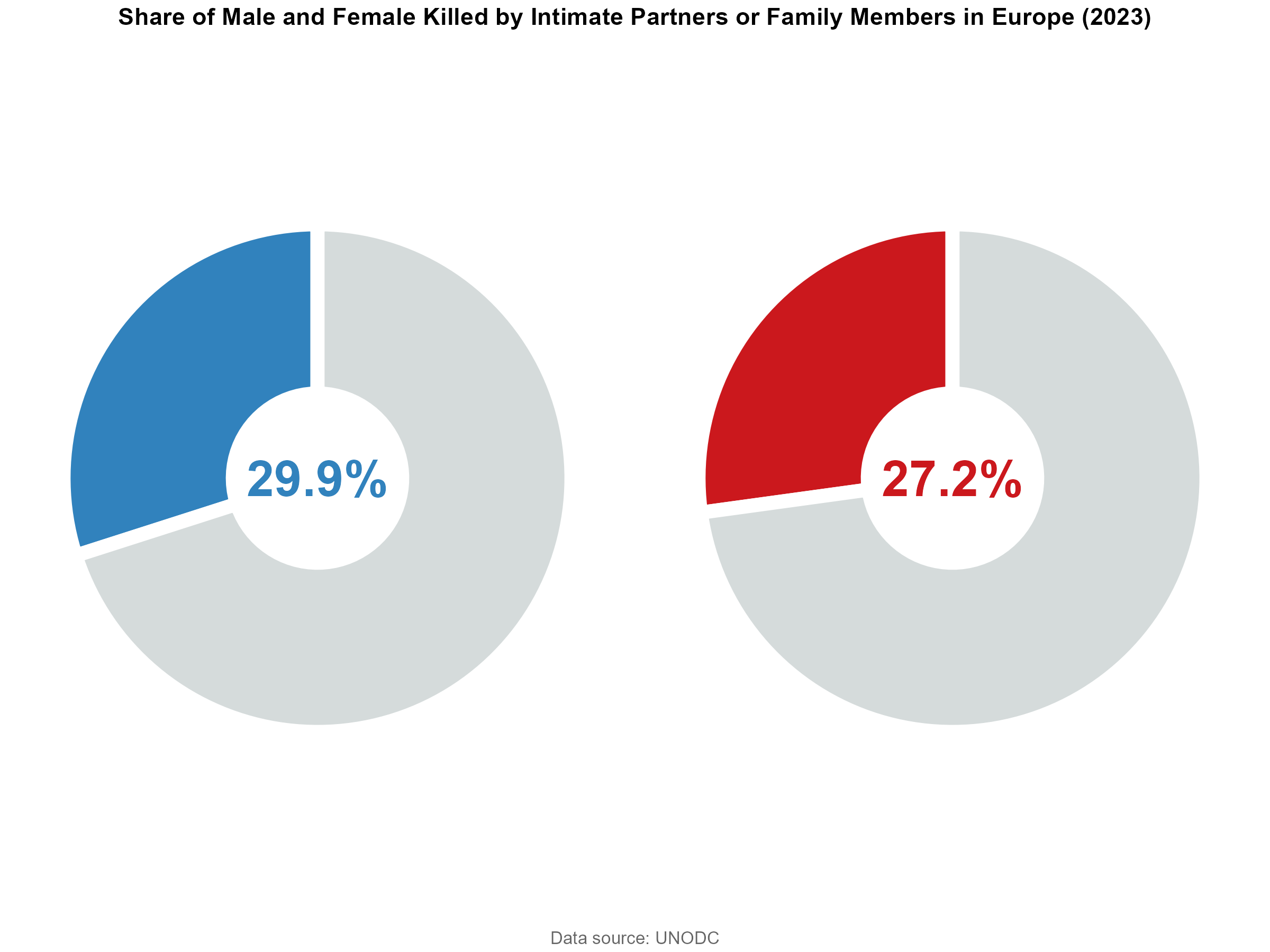
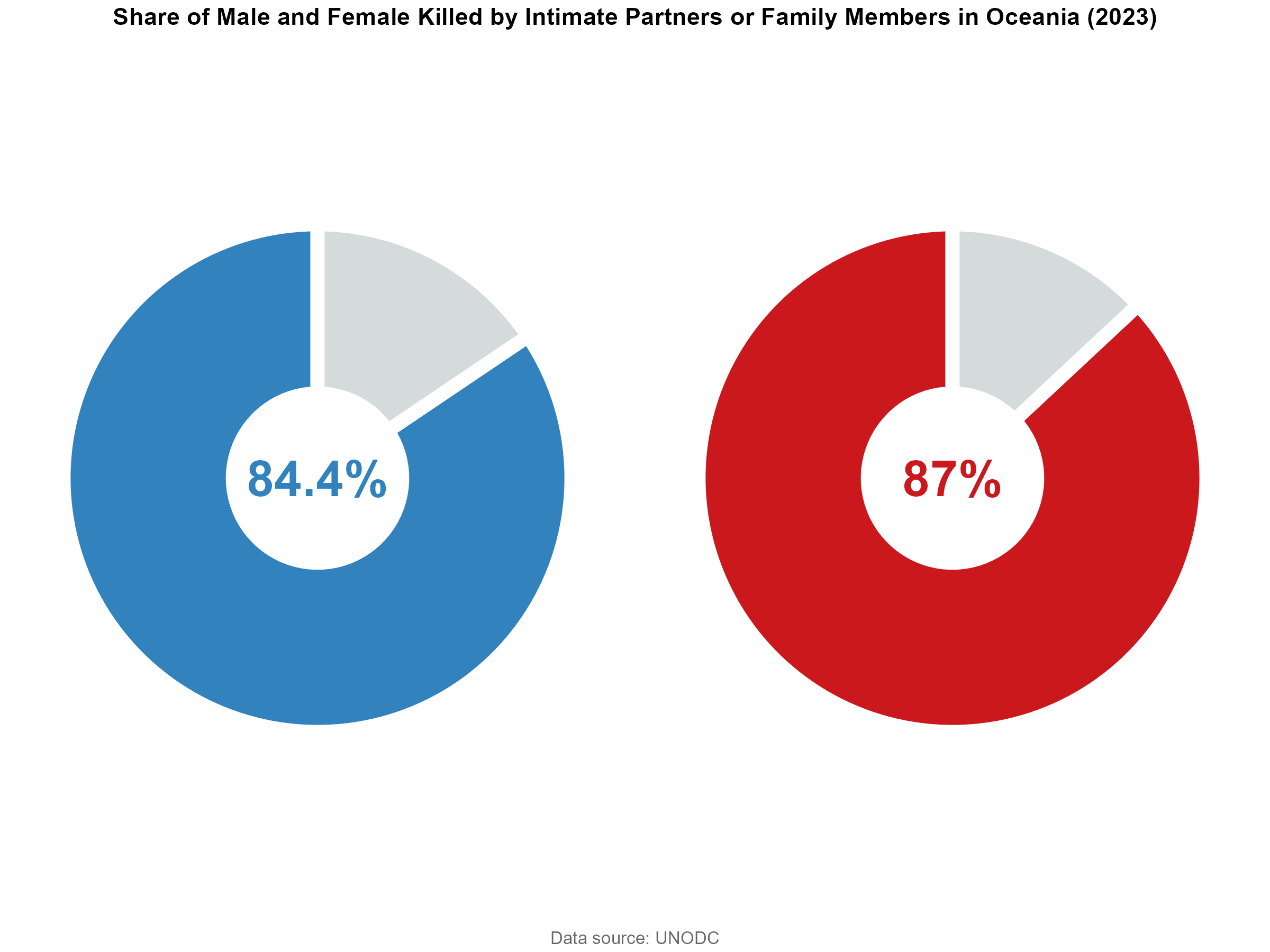
Extreme Gender Disparity in the Americas, Asia and Africa: In the Americas, Asia, and Africa, women are significantly more likely than men to be killed by intimate partners or family members, with the gender gap widest in Asia (43% vs. 25.4%), followed by Africa (30.6% vs. 11%) and the Americas (21.4% vs. 4.5%).
Europe’s Unique Near-Equality: Europe stands out as the only region where the shares are almost equal.
Even though men and boys account for the vast majority of homicide victims, women and girls continue to be disproportionately affected by lethal violence in the private sphere. An estimated 80 percent of all homicide victims in 2023 were men, while 20% were women, but lethal violence within the family takes a much higher toll on women than men.
Summary
Although the prevalence and characteristics of femicide vary significantly across regions, women and girls everywhere continue to be affected by this extreme form of gender-based violence, and no region is excluded.
Femicide overwhelmingly occurs within known relationships, with victims and perpetrators acquainted in 97 percent of cases. The vast majority of intentional killings of women and girls globally are committed by intimate partners or other family members, indicating that the home remains the most dangerous place for women and girls in terms of lethal victimization. This pattern stands in stark contrast to homicides involving male victims, where such relational dynamics are far less prevalent, highlighting a clear gender dimension in the nature of lethal violence.
Broadly speaking, femicides and gender-related killings of women and girls take place in various settings, both within the private sphere and beyond, and are often driven by gender-related motives. These motives stem from deeply rooted societal norms and stereotypes that view women as subordinate to men, along with systemic discrimination, gender inequality, and unequal power relations between women and men in society. Such gender-related motives define the context in which these crimes occur and distinguish them from other forms of intentional female homicide not linked to gender-based factors.
However, the availability of reliable femicide data remains a challenge in most countries. Significant regional disparities persist in the reporting of intimate partner and family-related femicides, with Europe and the Americas traditionally having the largest share of countries that publish such data. In recent years, however, all regions have experienced a notable decline in data availability, further complicating global monitoring and evidence-based response efforts.